Good News, Everyone!
Worldwide improvements in education.
Here are a few reasons why the world is becoming a better place. In this article, I have focused on data concerning kids and education to show that even during these tough times, the world is becoming a better place, especially for the younger generations.
Last update: August 2026.

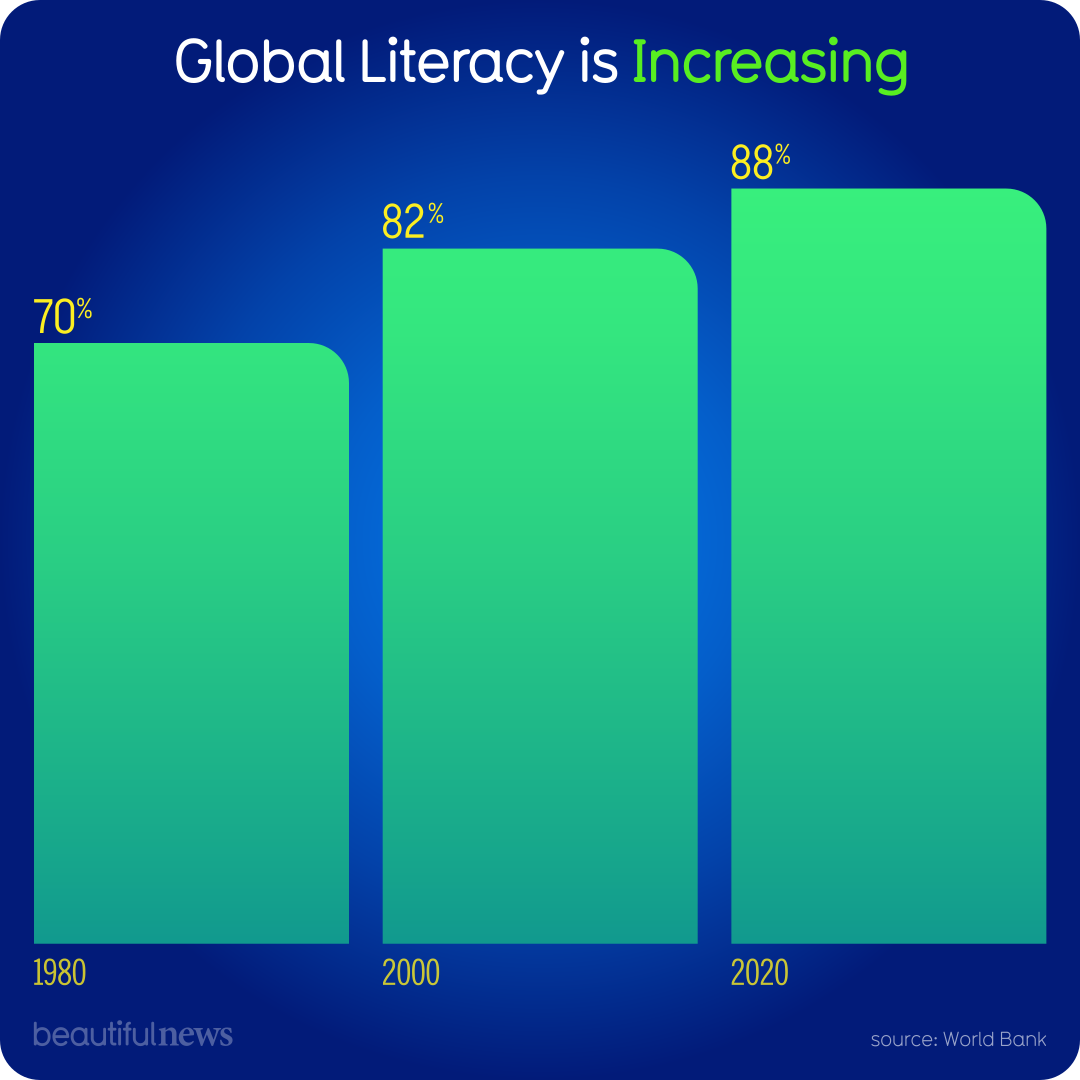
Worldwide literacy and Education.
Only 100 years ago, 68.4% of the world's population was illiterate. The most recent data suggest that four years ago this number had fallen to 12.3%, and it continues to fall.
I think this is one of the clearest indications that the worldwide base level of education is significantly improving. Allowing us more communication and greater connections for the global population.
It all starts at Primary
This shows what percentage of children aged 5-7 are enrolled in primary education. With numbers increasing across the globe.
Clearly, getting kids into education from the start is key to better education worldwide.

Afghanistan was the worst country for girls
20 years ago, the country had the lowest rate in the world.
“Educating girls is probably the single most impactful thing we can do to make the world a better place.
Women who spend longer in school have fewer, healthier and better-fed children, are less likely to die in childbirth, contribute more towards a country’s economy, participate more in politics, and are less likely to marry young or against their will.”
Years in School over the last 150 years
Countries I currently, or have recently, tutored.
Here I have chosen data from some countries where I currently or have recently had students. To select your own, click "More info" below.
Years in school 1990-2023
"This shows how many years a child starting school then can expect to spend in education across all levels, from pre-primary through to tertiary."
Greece leads with an average of 21 years in school. With numbers increasing across the globe, particularly in upper-middle-income countries. Low-income countries are still on the rise, with many countries making their official school systems longer, although repeating years also contribute to this data.
Child labour
Getting children into school and keeping them there for longer has had the massive benefit that 100 million fewer children are being forced into child labour compared to 2000.
"While the elimination of child labour remains an unfinished task, the latest global estimates bring some welcome news” - UNICEF
World population by Education level
Our world will be inhabited by more and more educated people. With half the world's population achieving some level of secondary education.
"A good education offers individuals the opportunity to lead richer, more interesting lives. At a societal level, it creates opportunities for humanity to solve its pressing problems"
School and child mortality.
There is a very clear negative correlation between the average years women spent in school and rates of childhood mortality. Such data implies a direct causal link; therefore, better education and more years in school literally save children's lives.
So those hours spent in classrooms worldwide are giving our population longer lives. In the past, half of all people died in childhood. Nowadays, 15,000 children still die every day, but things are getting better, with the length of time people spend in school increasing massively.
The Girls are catching up
"In some parts of the world, educating women and girls hits a lot of resistance. It’s up against social barriers, cultural norms and family tradition. But it’s winning.
This isn’t just about reading and writing. Greater literacy means greater empowerment, which means less poverty, lower crime and improved health. The gender literacy gap is set to narrow even more as access to education improves year on year, particularly in Southern Asia and Africa."

Globally, gender inequality is eroding
There’s a global gender gap in education. In many countries, boys’ schooling is prioritised over girls’ for various social, cultural and economic reasons. But the gap is closing – slowly. Gender stereotypes are being dismantled. Governments are changing their education strategies. More girls in school means society transforms for the better.
More people with degrees
Tertiary education refers to any education pursued beyond the secondary (high school) level, typically aged 18-22.
Again, it is encouraging to see more people going on to higher education beyond secondary school and continuing their education into adulthood. While you don’t need a degree to show that you are smart or successful, it is still great to see that more people are getting the opportunity to study at a higher level
Dr Andy Gibson
BSc PGCE QTS MSc PhD
Find out more about my background in physics and education.
My Blog on education, physics, and scientific skepticism.
BlogOutside the UK?
Middle East and Hong Kong.
After A-level and GCSE resources?
Check out my free worksheets.
Take a look at how online tutoring works and other FAQs.
My availability rates and contact details.
Contact:
Andrew +447740 366007
Copyright © 2026 Andrew Gibson. All Rights Reserved.